
Flat Head Syndrome & Torticollis: What Parents Need to Know (from a pediatric PT)
If you’ve ever looked at photos of your baby and thought, “Why is their head always turned the same way?”—you’re not alone. Flat head syndrome (also called positional plagiocephaly) and torticollis are incredibly common in infants, and the good news is: they are very treatable, especially when caught early. Let’s break this down in a way that actually makes sense.
What Is Flat Head Syndrome?
Flat head syndrome happens when pressure is placed on the same area of a baby’s head for prolonged periods of time. A perfectly flat area straight across the back of the head is most commonly seen in babies who spend a lot of time lying on their backs without enough position changes during the day. This does not mean parents are doing anything wrong—safe sleep is still essential. But outside of sleep, babies need variety in how they move and position their bodies.
When Flat Head Is Linked to Torticollis
If the flat spot is more on one side of the head, there’s often an underlying reason—most commonly torticollis.
Torticollis is a tightness in the neck muscles that causes a baby’s head to:
Tilt toward one side (same side as tightness)
Rotate to the opposite side
You might notice your baby always looks the same direction in photos, prefers feeding on one side, or struggles to turn their head both ways. Sometimes this tightness develops after birth, and sometimes it’s present right away. My own daughter came out looking to the left—those cozy quarters in the womb can absolutely contribute to early neck tightness.
Why Early Intervention Matters
A tight neck doesn’t just affect head shape—it impacts:
Head control
Rolling
Tummy time tolerance
Symmetrical motor development
The earlier we address it, the easier it is to correct—often without the need for a helmet. In physical therapy, we focus on:
Gentle stretching and hands-on techniques to reduce neck tension
Improving active head rotation to both the right and left
Teaching parents positioning strategies that work in real life
For babies with flat spots on one side, we may use supervised side-lying positioning to apply counter-pressure to the rounded side of the head. (Important note: side-lying is never used for sleep and is always supervised, especially before a baby can roll independently.)
If the flat area is directly across the back of the head, side-lying can still be helpful, along with tummy time and reducing time spent in containers. It is also helpful to reduce flat spots on the side of the head (using counterforce to reshape the head).
How to Encourage Better Head Movement at Home
If your baby prefers looking left, we want to gently encourage them to look right by manipulating the environment, not forcing movement.
That means:
Offering toys on the non-preferred side
Positioning yourself on the side you want them to turn toward
Feeding from both sides
Placing interesting visuals where they have to rotate to see them
And of course—tummy time matters. It strengthens the neck, shoulders, and core while naturally reducing pressure on the head.
The Takeaway
Flat head syndrome and torticollis are common, fixable, and nothing to panic about—but they do deserve attention. If something feels off, trust your gut. Early support can make a huge difference in your baby’s comfort, movement, and development. And remember—you’re not behind. You’re just learning your baby.
Until next time,
Dr. Brittany Nardone, PT, DPT
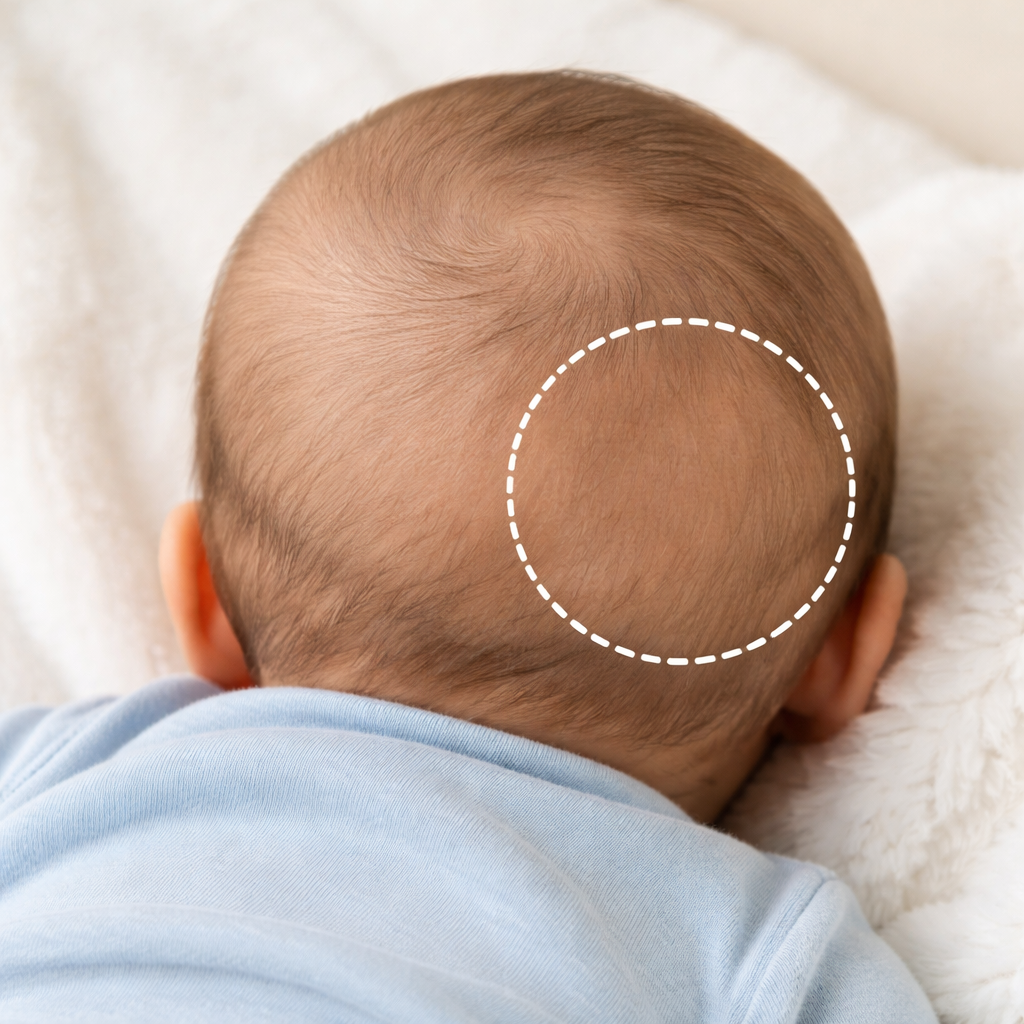
Infant with flat head syndrome due to Torticollis
