
Understanding Low Muscle Tone: What Parents Need to Know
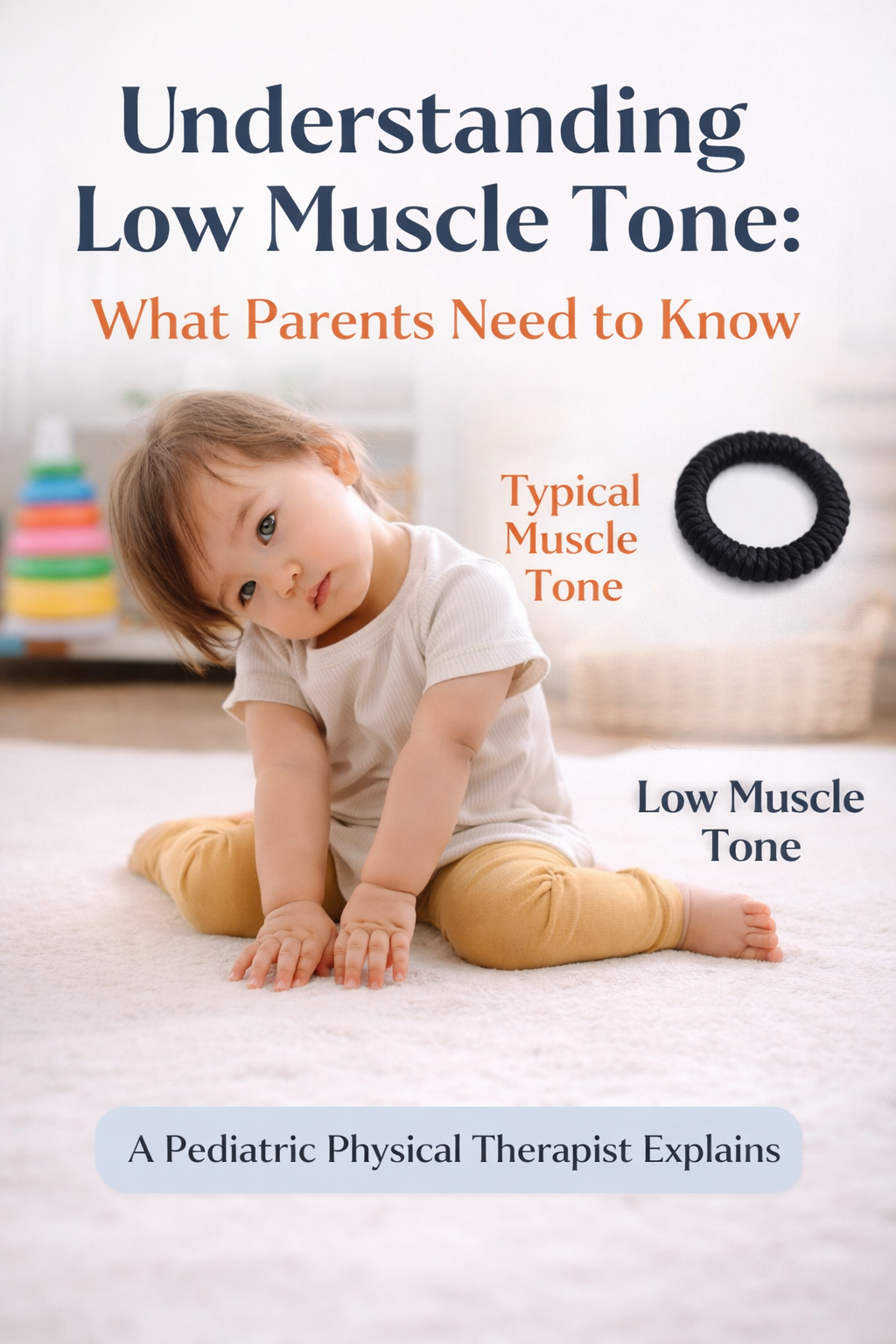
Low muscle tone is something we see often in our office, and it’s one of those terms that can sound much scarier than it actually is. Parents frequently come in worried about what it means for their child long-term — and my goal is always to bring clarity, reassurance, and realistic expectations. Let’s break it down.
What Is Low Muscle Tone?
Low muscle tone (also called hypotonia) is neurologic, meaning it’s related to how the nervous system communicates with the muscles. It’s something a child is born with, not something caused by laziness, lack of effort, or parenting.
Some children have idiopathic low muscle tone, which means there’s no clear medical reason why — it’s simply how their body is wired. Other times, low muscle tone can be associated with diagnoses such as:
Autism
Genetic or chromosomal disorders
Certain neurological conditions
My Favorite Way to Explain Low Muscle Tone
I always describe muscle tone using a hair tie analogy. When you buy a brand-new hair tie, it has great recoil. You stretch it, and it snaps right back — that’s typical muscle tone. Now imagine a hair tie you’ve used forever. It’s stretched out, loose, and floppy. When you pull it, it doesn’t recoil well anymore — that’s low muscle tone. The muscle itself isn’t broken — it just doesn’t have that natural “springiness.”
Low Muscle Tone Does NOT Automatically Mean Weak
This is one of the biggest misconceptions. Just because a child (or adult) has low muscle tone does not mean they are weak. Strength and tone are related, but they are not the same thing. However, low muscle tone can make it harder to sustain strength over time, which is why we often see:
Faster fatigue
Poor posture
Difficulty keeping up with peers
This is where strengthening becomes so important. When we build strength, it helps compensate for low tone and reduces fatigue, improves posture, and increases endurance.
What Does Low Muscle Tone Look Like in Kids?
Low muscle tone often becomes more noticeable when kids are younger, especially in school or play settings. These are often the kiddos who:
Prefer sitting in a W-position
Fatigue quickly during circle time
Slouch, lean, or lay down after prolonged sitting
Struggle with climbing, playground skills, or endurance
Are described as “floppy babies” or “noodle kids”
Again — none of this means they can’t do things. It just means they need more support building endurance and strength.
Is Low Muscle Tone Detrimental?
Short answer: No.
There are many adults walking around with low muscle tone who don’t even know they have it. It’s not dangerous, and it’s not something I tell parents they need to fear. Low muscle tone is simply more noticeable in childhood, when kids are still developing their strength, coordination, and stamina.
How Physical Therapy Helps
Physical therapy is incredibly beneficial for children with low muscle tone because we focus on:
Building strength
Improving endurance
Supporting posture
Increasing participation in play, school, and daily life
With the right support, kids with low muscle tone can:
Participate in sports
Succeed in school
Keep up with their peers
This is not a diagnosis that limits your child’s future.
The Takeaway
Low muscle tone is not something parents need to panic about. It’s not a reflection of effort, intelligence, or potential. With the right guidance and strengthening, kids with low muscle tone can thrive. My goal is always to help families understand what’s going on, feel empowered, and know that their child is capable — because they absolutely are. If you ever have concerns about your child’s strength, endurance, or movement, a pediatric physical therapist can help guide you every step of the way.
Until next time,