
Uncoordinated Children & Poor Body Awareness: How Physical Therapy Can Help
Many parents come to us saying things like, “My child is just clumsy,” or “They’re always tripping, bumping into things, or knocking things over.” While this can sometimes be brushed off as kids being kids, frequent falls, collisions, and difficulty moving through space may point to challenges with coordination and body awareness.
The good news? These are skills that can absolutely be improved — and physical therapy can help.
What Is Body Awareness?
Body awareness (also known as proprioception) is the body’s ability to understand where it is in space without having to look. It’s how your child knows:
How close they are to a wall
How hard to push, pull, or throw
Where their arms and legs are during movement
When body awareness is reduced, kids may appear uncoordinated even though they’re trying their best.
What Does Poor Body Awareness Look Like?
Children with poor body awareness may:
Trip or fall frequently
Bump into furniture, walls, or peers
Knock things over easily
Struggle with playground equipment
Have difficulty learning new motor skills
Appear awkward or hesitant with movement
These children aren’t careless — their nervous system is having trouble processing feedback from their muscles and joints.
Why Coordination Can Be Hard for Some Kids
Coordination requires multiple systems working together:
Strength
Balance
Sensory processing
Timing and motor planning
If one or more of these areas is delayed or inefficient, movement can look disorganized. This is commonly seen in children with developmental delays, sensory processing differences, low muscle tone, or neurodivergent profiles — but it can also appear in otherwise typically developing kids.
How Physical Therapy Helps
In physical therapy, we focus on helping children understand and control their bodies better through purposeful, play-based movement.
PT helps by:
Improving body awareness and proprioception
Building strength and stability
Enhancing balance and coordination
Practicing movement in a safe, supportive environment
Helping kids gain confidence in their bodies
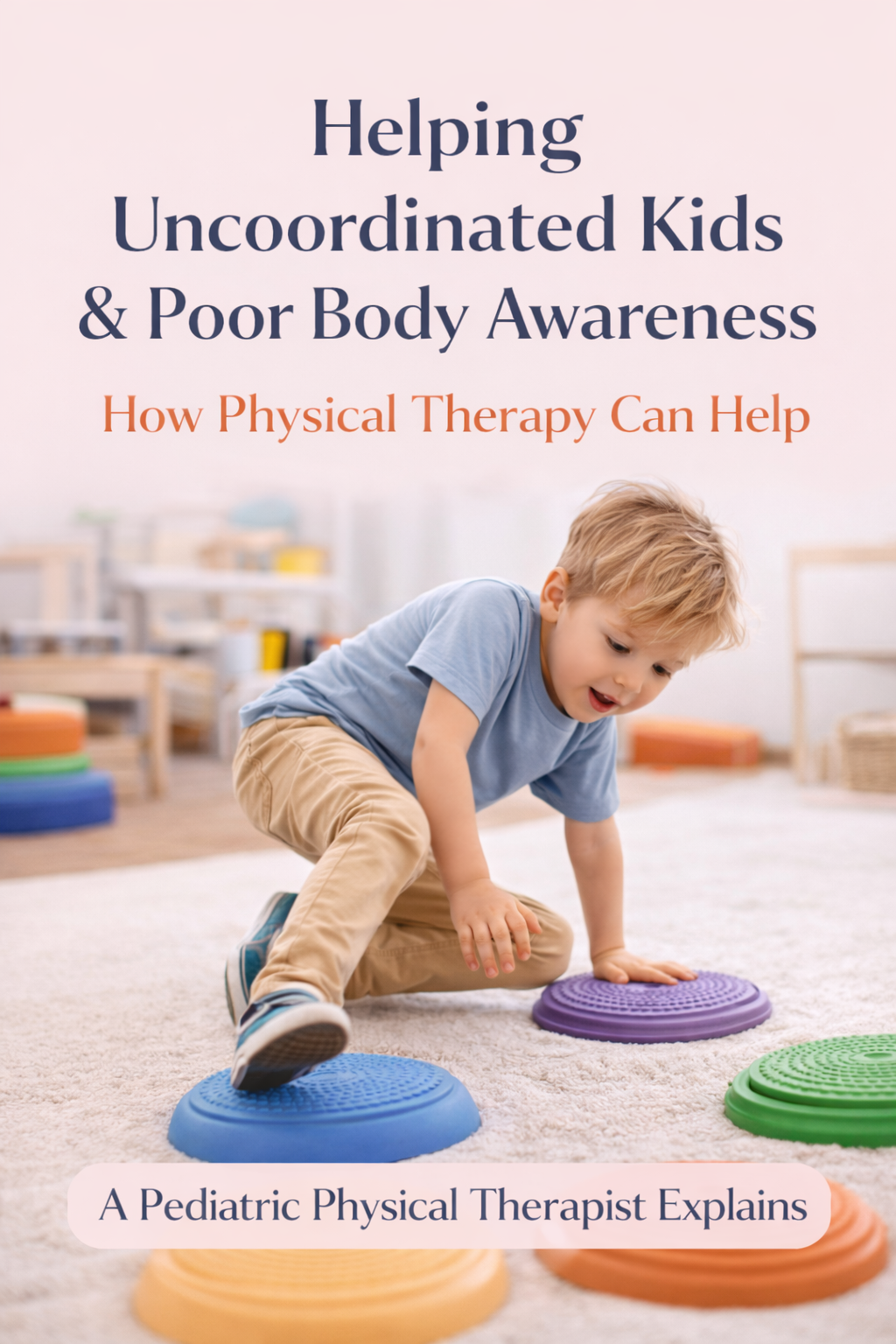
We use activities that give strong sensory feedback — climbing, pushing, pulling, jumping, crawling, and navigating obstacle courses — to help the brain better understand where the body is in space.
Why This Matters for Daily Life
Poor coordination doesn’t just affect sports or playground skills. It can impact:
Participation in gym and recess
Confidence with peers
Willingness to try new activities
Safety during daily movement
When kids feel unsure of their bodies, they may avoid movement altogether — which can further limit skill development.
The Takeaway
If your child seems uncoordinated, frequently bumps into things, or struggles to understand their body in space, it doesn’t mean they’re lazy, careless, or unathletic. It often means they need support building foundational movement skills. With the right guidance, children can improve coordination, gain confidence, and move through their world more safely and successfully. Physical therapy provides the tools and strategies to help make that happen. If you have concerns about your child’s coordination or movement, a pediatric physical therapist can help determine what’s going on and how to best support them — through play, movement, and confidence-building every step of the way.
Until next time,
Dr. Brittany Nardone, PT, DPT, CPRCS